
What is MTA?
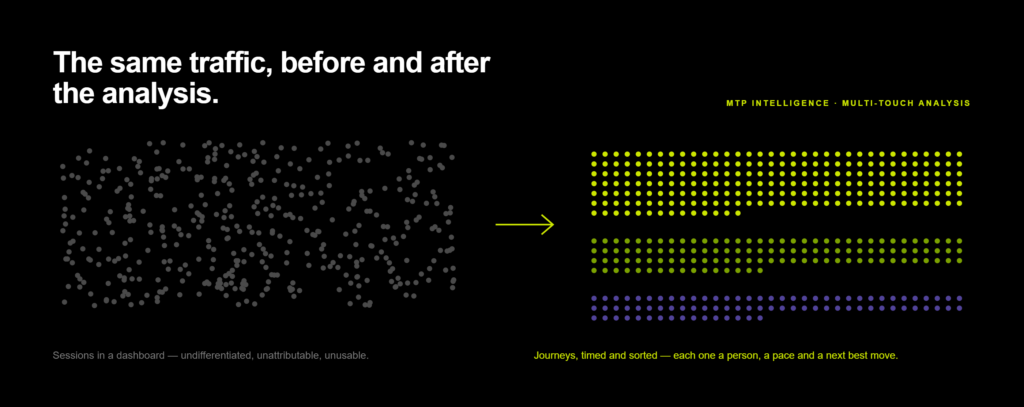
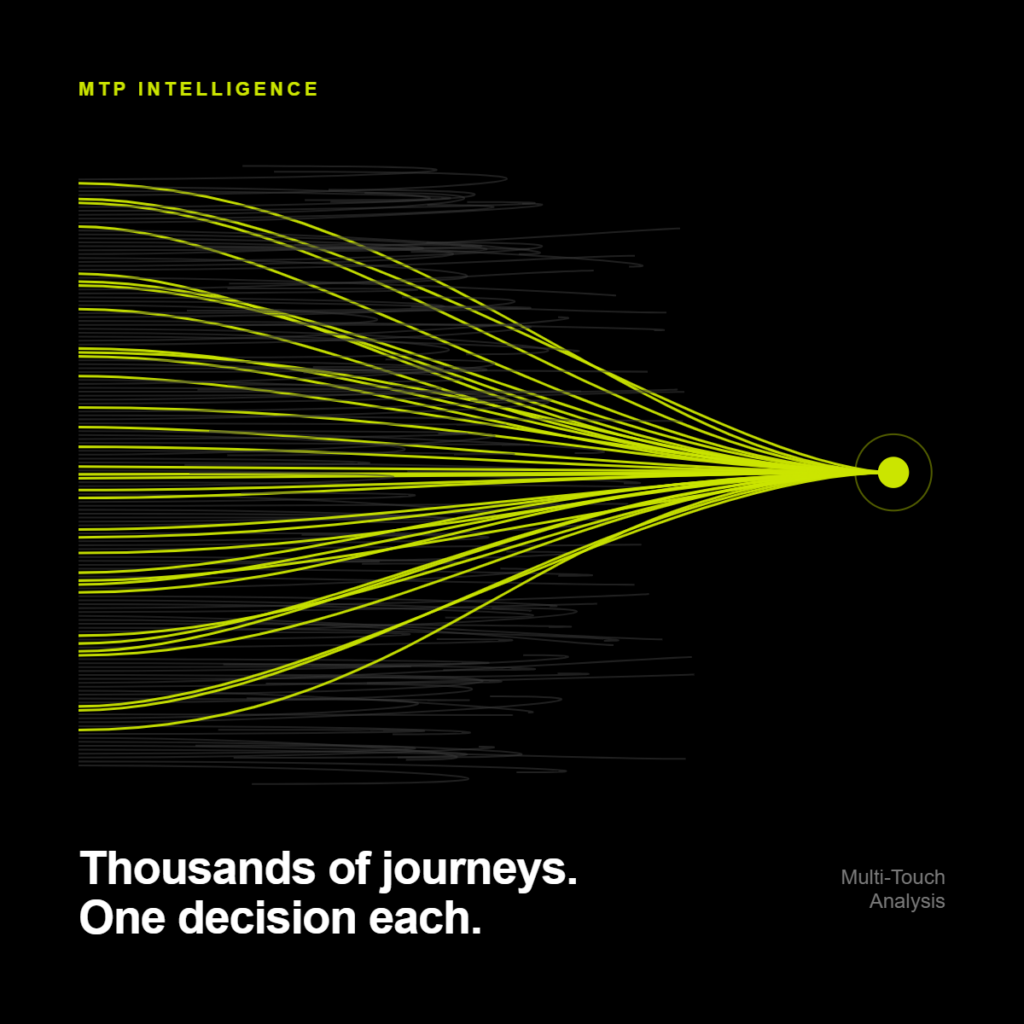
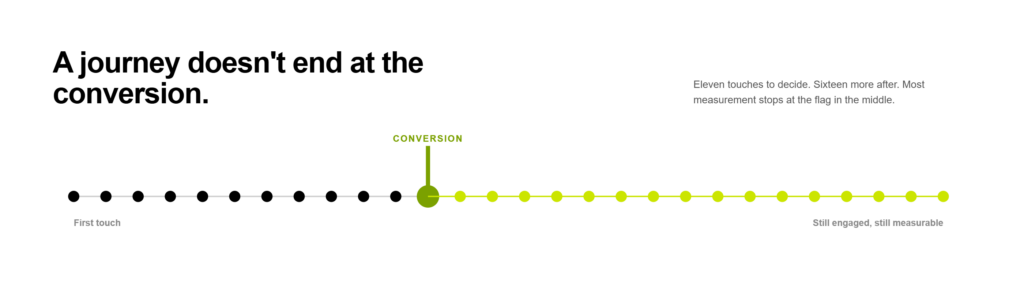
Multi-Touch Attribution (MTA) is a data-driven user journey analysis within the Intelligence Platform. By unifying Google Analytics 4 event data, Google Ad Manager, and first-party CRM user records in Google BigQuery, MTA maps the complete multi-touch path that users travel from initial discovery to conversion.
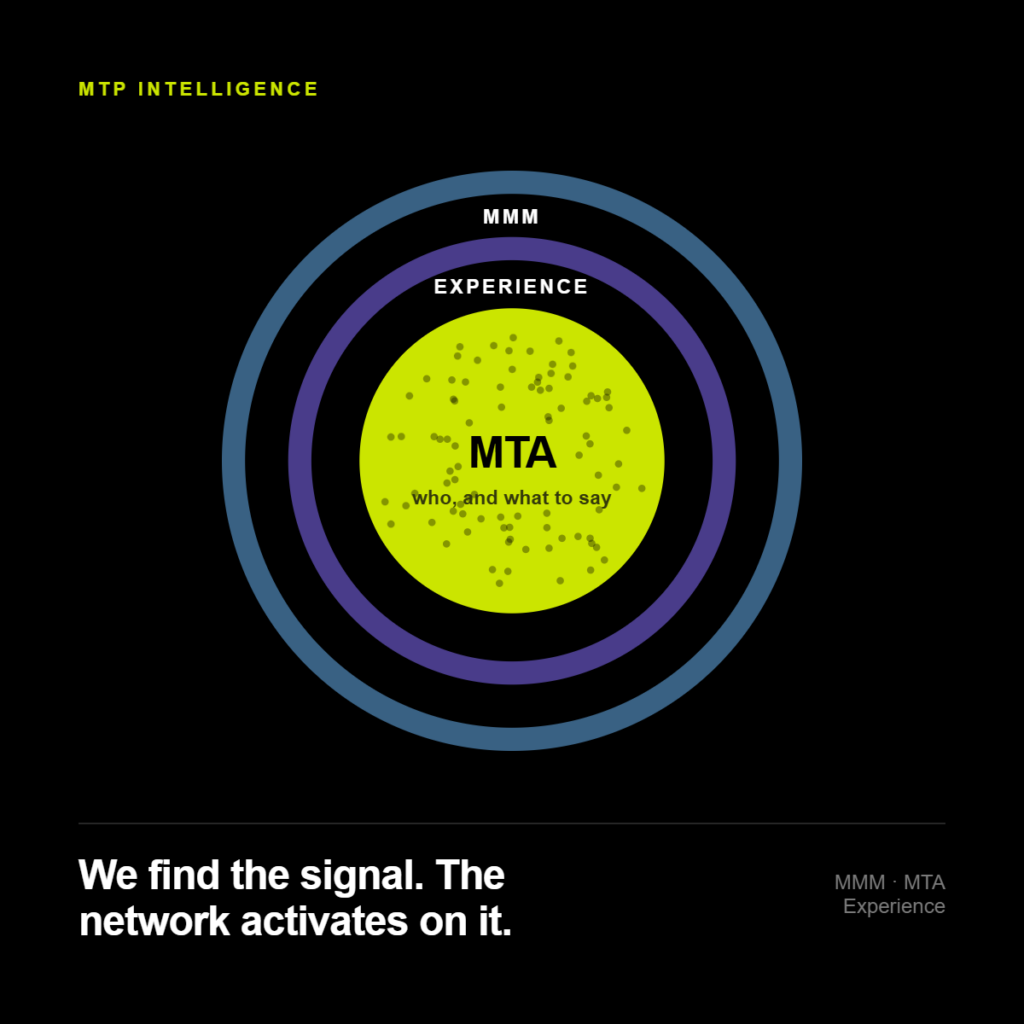
Driven by an 18-Question Library and a Dual-Core Performance Engine (Efficiency Core & Relevancy Core), MTA provides media, creative, and web teams with actionable operational outputs and strategic executive briefs to optimize media spend, audience targeting, creative messaging, and on-site user journeys.
How It Works & How to Use It
Step 1: Data Setup & Infrastructure Unification
GA4 event data exports, Google Ad Manager data, and first-party CRM user records are ingested, cleansed, and merged in Google BigQuery to establish a single unified user journey dataset.
Step 2: Continuous Dual-Core Optimization Engine
The Efficiency Core (Targeting & Conversion): Solves Who to target and Where to convert. It creates proprietary audience lists, calibrates budget from “assisters” to “drivers,” applies precision bid multipliers for incremental lift, and exports top-performing “Whale” profiles directly to Meta and Google ad platforms.
The Relevancy Core (Messaging & Discovery): Solves What to say and How to be found. It optimizes ad relevance based on behavioral needs, adjusts on-site journey architecture to bridge informational pages to form submits, and surfaces audience search questions for AI model indexing (“Share of Suggestion”).
Step 3: Quarterly Question Selection
Clients and agency teams align quarterly on specific deep-dive questions selected from MTA’s 18-Question Library across three strategic areas.
Step 4: Two-Layer Output Delivery
Layer 1 (Operational Outputs): Direct parameters, lists, and data files delivered directly to agency specialists for immediate deployment (e.g., 1P audience lists, DSP blacklists, creative rotations).
Layer 2 (Intelligence Reports): PDF decks delivered on a fixed cadence to C-suite, CMOs, SEO heads, and web dev leads.
Key Findings and Insights
- Precision Bidding & Reduced Wasted Spend: Identifies non-incremental conversions and applies bid multipliers to stop overpaying for low-value touchpoints.
- Faster Time-to-Convert: Corrects journey bottlenecks and optimizes landing page sequences to reduce overall conversion lag.
- Future-Proofed 1st Party Signal: Builds an audience definition owned by the brand, preparing campaigns for the cookieless AI era and “Share of Suggestion” discovery.
What Do I Do Once I Have Access to My MTA Analysis?
Deploy First-Party Audience Exports and Precision Bidding
- Export high-value "Whale" audience profiles directly to Google and Meta ad platforms to train targeting algorithms, while applying precision bid multipliers to maximize incremental lift.
Reallocate Budgets Across Winning Channel Sequences
- Shift media spend from passive "assister" tactics to high-converting "driver" campaigns, adjusting creative rotations and retargeting windows based on top-performing user paths.
Execute On-Site UX and Content Fixes
- Implement the page abandonment fix list, bridge content gaps, and re-architect site navigation to eliminate friction points along converting journey paths.
Present Executive Briefs and Align Next Quarter's Deep Dives
- Deliver the C-suite intelligence report to stakeholders within 15 business days of quarter close, then select two new focus questions from the 18-Question Library for the upcoming cycle.
When Should I Use MTA?
Budget Reallocation & Waste Reduction
Use MTA when you need to identify over-credited “assister” channels and reallocate spend toward true conversion “drivers” using precision bid multipliers.
Defining Retargeting Windows & Conversion Lag
Deploy MTA when analyzing time-to-conversion and touchpoint frequency to determine the exact threshold for shifting campaigns from prospecting to retargeting.
First-Party Audience & Lookalike Expansion
Leverage MTA to extract high-value “Whale” profile paths and top-performing journey segments to feed proprietary first-party signals into Google and Meta targeting algorithms.
Multi-Touch Creative & Message Alignment
Apply MTA when evaluating which ad creative assets, messaging hooks, and channel combinations appear most frequently in successful multi-touch conversion journeys.
On-Site UX & Page Abandonment Diagnostics
Utilize MTA to isolate high-friction landing pages, broken navigation paths, and on-site drop-off points to prioritize page-level user experience fixes.
Executive Leadership & C-Suite Strategy
Turn to MTA prior to quarterly business reviews to deliver board-level briefs on overall sales cycle velocity, true channel ROI, and brand versus performance budget splits.
Ready To Get Started?
Contact the RADaR Analytics team at [email protected]
Latest blog posts about MTA
-
We Built a Brain for Your Campaign Data. Meet your Campaign Performance Assistant (CPA).
UPDATE: September 9, 2026 CPA is now available to all MTP employees. Updates and improvements since our initial release include: Campaign Performance Assistant by Meet The People Dark banner with grid background, funnel ring motif on the left, and connected data nodes on the right Campaign Performance Assistant BY MEET THE PEOPLE Your clients’ marketing… -
Campaign Performance Analyst Architecture Update
The Campaign Performance Analyst (CPA) project at RADaR has shifted from standard AWS/Snowflake tools to a custom Python architecture featuring proprietary custom AI agents and Anthropic’s Model Context Protocol (MCP) Server. This overhaul significantly improved flexibility and cut query response times from two minutes to under 20 seconds. -
Campaign Intelligence Technical Architecture Research
As we move into development of our latest tool, Campaign Intelligence, we need to take a look at the high-level architecture and available resources before moving forward. This document serves as a reference for the research we did, the benefits and drawbacks of using specific integrations for our product, and the reasoning behind any decisions…